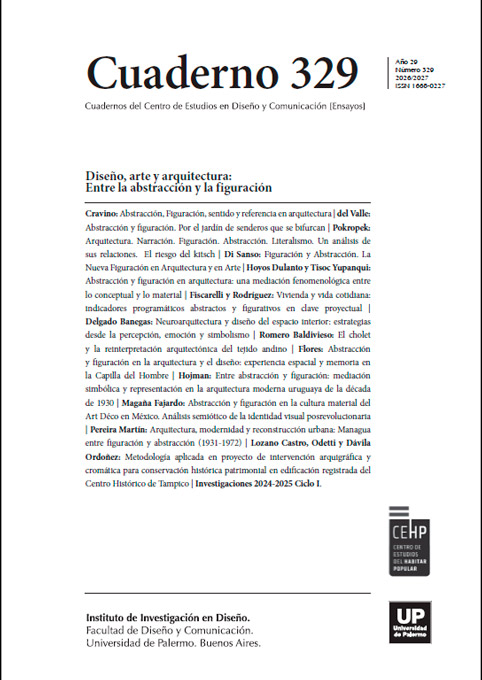
Neuroarquitectura y diseño del espacio interior: estrategias desde la percepción, emoción y simbolismo
Abstract
Neuroarchitecture has emerged as a transdisciplinary field that enables an understanding of the experience of built space through the interaction of perception, emotion, cognition, and embodiment; within this context, this article examines the role of interior space and symbolism as mediators of neurocognitive responses, based on the analysis of two fundamental design strategies: abstraction and figuration.
References
Arnheim, R. (1974). Art and visual perception: A psychology of the creative eye (2nd ed.). University of California Press. https://www.ucpress.edu/book/9780520243835/art-andvisual-perception
Cravino, Ana (Noviembre de 2024-Abril de 2025). Notas en torno a la noción de evidencia empírica para la investigación en Arquitectura, Diseño y Urbanismo. AREA, 31(1), 1-20. https://doi.org/10.62166/area.31.1.2976
Damasio, A. R. (1994). Descartes’ error: Emotion, reason, and the human brain. G. P. Putnam’s Sons. https://www.penguinrandomhouse.com/books/104252/descartes-errorby-antonio-damasio/
Los autores/as que publiquen en esta revista ceden los derechos de autor y de publicación a "Cuadernos del Centro de Estudios de Diseño y Comunicación", Aceptando el registro de su trabajo bajo una licencia de atribución de Creative Commons, que permite a terceros utilizar lo publicado siempre que de el crédito pertinente a los autores y a esta revista.